
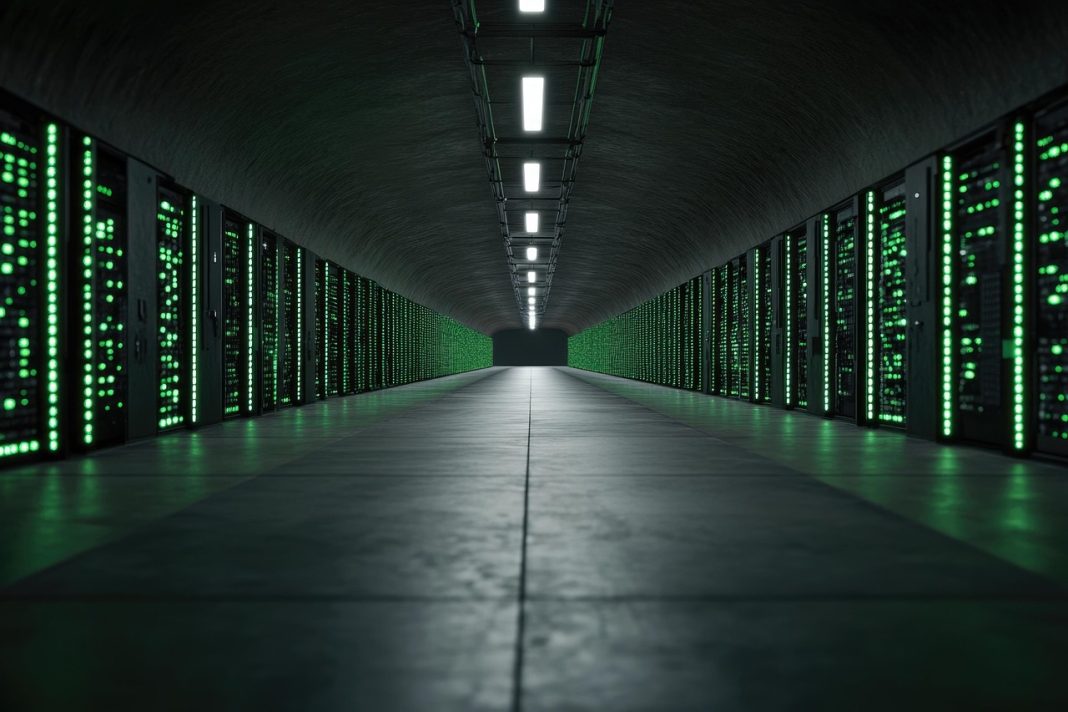

The AI data center is no longer a hyperscaler-only story. As rack densities cross 100 kW and liquid cooling moves from exotic to essential, a layer of solutions providers and system integrators has become the connective tissue between GPU roadmaps and operational reality. Their role is less about building walls and more about making disparate technologies—compute, power, cooling, software, and real estate—work as a single system.
The Architectural Shift Driving the Need
The technical case for integrators begins with power density. Five years ago, a typical data center rack consumed 5 to 10 kW. Today, advanced AI racks surpass 100 kW, with NVIDIA’s Blackwell NVL72 rated at 132 kW per rack. Every watt consumed generates a watt of heat that must be dissipated, which means cooling is no longer an afterthought but an intrinsic design constraint requiring liquid cooling loops, manifolds, and cooling distribution units.
This complexity has made the ecosystem model unavoidable. Schneider Electric, which supplies power and cooling infrastructure, describes an environment where no single company can address AI infrastructure alone—silicon providers, server manufacturers, infrastructure vendors, and systems integrators must coordinate earlier in design and validation to avoid integration failures. Schneider now provides digital twins, simulation, and reference designs for NVIDIA’s GB200 and GB300 NVL72 platforms and AMD Helios, with pre-engineered power and liquid-cooling frameworks.
The Big Integrators and Their Plays
Accenture has positioned itself across the full lifecycle, from planning and permitting through construction and operations. Its data center services emphasize integrated delivery—coordinating utilities, suppliers, and technology providers through a single control tower—and it cites figures showing that programs fail at the interfaces between domains rather than within them. Accenture claims its approach can pull forward revenue by up to 20% and reduce capital expenditure by up to 30% through modular design and value engineering. It also emphasizes digital twins for scenario planning and the ability to retrofit live facilities for successive GPU generations, which arrive every 18 to 24 months.
Deloitte has taken a workload-first approach. Alongside Vertiv, it published a framework that asks enterprises to begin with the intended business outcome and AI workload, then assess deployment location and facility readiness before committing capital.
The guide categorizes workloads into archetypes and maps them to four infrastructure models—edge AI cluster, small AI cluster, large AI cluster, and high-density AI cluster—each with corresponding reference designs. Deloitte’s broader data center practice spans site selection, power access, permitting, AI-ready architecture design, and operations using AIOps and FinOps.
Wipro launched a standardized AI-Data Center solution built on NVIDIA AI Enterprise and integrated into its Wipro Intelligence platform. The offering is explicitly aimed at moving enterprises from isolated AI pilots to production-grade deployment, and it extends into customer experience—powering an AI-driven contact center agent assist solution with real-time transcription, RAG-based knowledge assistance, and sentiment-aware insights. Wipro was also named a Leader in Gartner’s 2026 Magic Quadrant for Data Center Outsourcing Services, which it attributes to combining infrastructure expertise with AI-powered operations.
HCLTech has moved beyond services into ownership. In July 2026, it announced a plan to invest up to ₹3,500 crore (approximately $370 million) to establish AI data centers with the potential to scale to 50 MW of capacity.
This sits alongside its services business, where Advanced AI revenue grew 62.1% year-over-year to $171 million in Q1 FY2026, and where it won an AI Factory program expansion worth over $180 million for data center buildout. HCLTech’s model combines design, DevOps, AI cloud operations, and now physical capacity—an integrated end-to-end play that few pure services firms have attempted.
At the hardware integration layer, Hyve Solutions, a TD SYNNEX subsidiary and NVIDIA partner, designs and manufactures purpose-built AI infrastructure with in-region liquid cooling testing and validation. Its Orion platform, featuring NVIDIA HGX Rubin NVL8, uses direct liquid cooling to capture up to 98% of system heat and supports up to 128 GPUs per rack—a concrete example of how integrators are engineering around thermal limits.
Where It Is Happening
The buildout is genuinely global, though concentrated in specific corridors. In the United States, hyperscaler capital expenditure for 2026 is projected at roughly $900 billion across Amazon, Alphabet, Meta, Oracle, and Microsoft—nearly matching their cumulative spend since ChatGPT launched . Microsoft has committed $30 billion to the U.K., anchored by a supercomputing facility with over 23,000 NVIDIA GPUs . Google is building a $6 billion hyperscale campus in Visakhapatnam, India, as part of a $25 billion global spend.
In Asia Pacific, India has become a notable integrator opportunity. Between March 2025 and April 2026, operators announced roughly 30 large data center projects adding approximately 3.5 GW of planned capacity, concentrated in Hyderabad, Visakhapatnam, Pune, Chennai, and Noida.
The gap between announced capacity and operational capacity is where system integrators operate—most hyperscalers do not manage the physical environment when infrastructure is deployed on-premises or in colocation, leaving GPU server configuration, liquid cooling specification, and phased rollout to partners. Data residency requirements in banking, healthcare, and government are further influencing site selection and partner choice.
Who the Customers Are
The customer base is broader than the hyperscalers. At the top, Amazon, Google, and Microsoft remain the largest buyers, but their projects are largely self-managed or delivered through specialized construction partners. The integrator opportunity lies in the tier below: global capability centers (GCCs), AI startups, and mid-sized enterprises building dedicated AI environments . These buyers are deploying inference workloads for analytics, automation, and internal productivity—smaller in scale than hyperscale campuses but with higher power density and thermal requirements than standard IT, and each requiring design, deployment, and ongoing management.
Regulated industries are emerging as a distinct segment. Banks, healthcare providers, and government agencies need AI capacity but cannot simply default to public cloud; they require data residency, sovereignty, and compliance controls that shape architecture and partner selection.
What the Future Holds
Three trends will define the next phase. First, the integrator as operator. HCLTech’s move to build and potentially operate its own AI data center capacity signals a shift from advising on infrastructure to owning it—a model that trades capital intensity for margin and control. If successful, it will likely be copied.
Second, workload placement as a discipline. Deloitte and Vertiv’s framework reflects a recognition that not all AI belongs in the same place. Exploratory workloads may suit the cloud; sustained or business-critical workloads may favor hybrid or enterprise-managed capacity; latency-sensitive workloads may need edge deployment . Integrators that can advise on placement—not just build—will capture higher-value work.
Third, the monetization test. J.P. Morgan notes that AI capital expenditure is rising faster than revenue, and the durability of the boom depends on whether cloud usage, enterprise software, and AI subscriptions grow fast enough to justify the investment . If monetization disappoints, the integrator pipeline could tighten quickly. But for now, the gap between announced AI capacity and operational capacity remains wide, and the companies that can close it—with power, cooling, and integration expertise—are in an enviable position.
Picture Courtesy: Pixabay.com

