


The deepening tie with the United States is creating a very meaningful opportunity for Indian businesses to build a presence there. Both India and the United States are democracies which are high consumption markets and the sectors which are likely to emerge for Indian businesses to enter the United States markets, would be sectors such as technology services, digital transformation, pharmaceuticals, healthcare, advanced manufacturing, engineering, clean energy, consumer products and professional services.
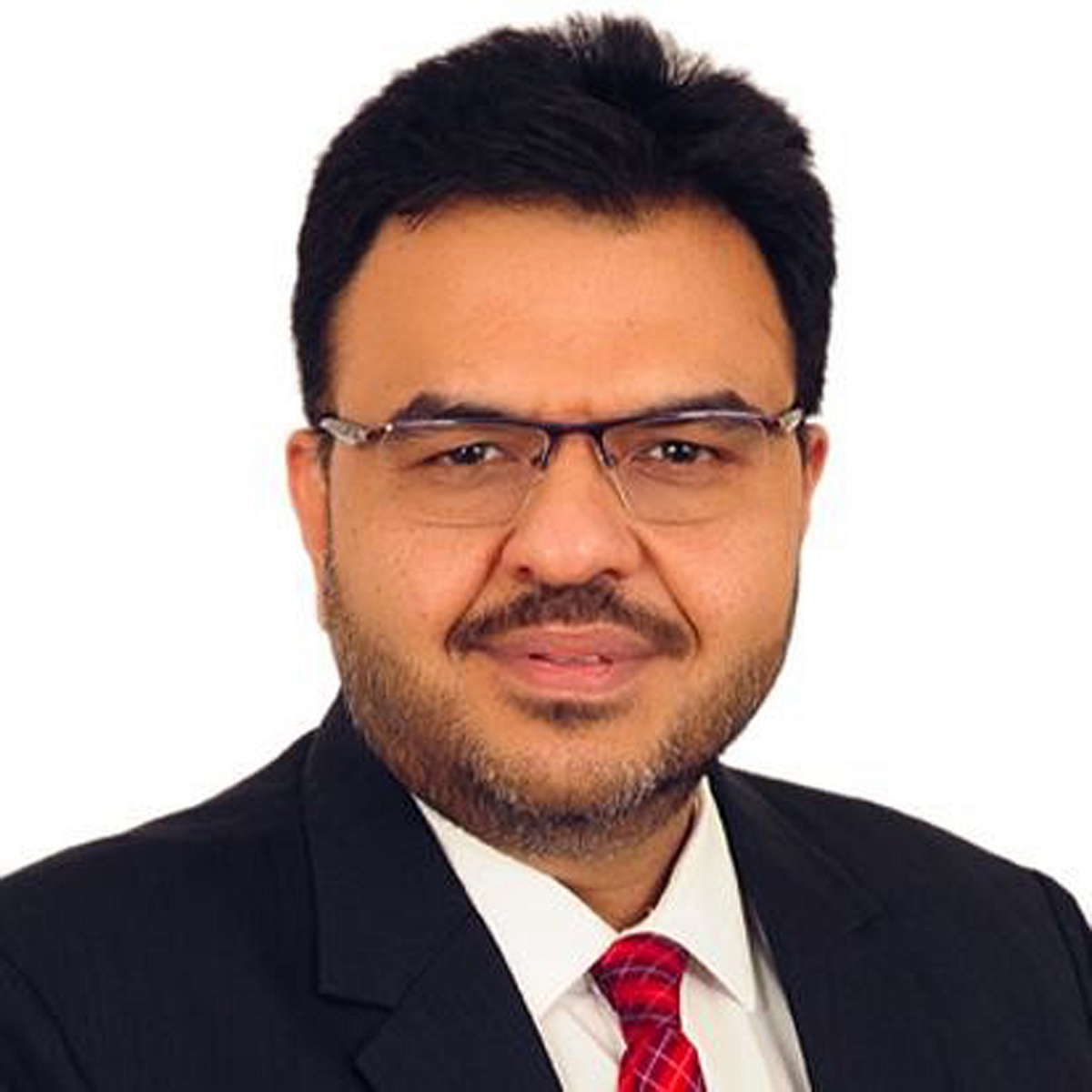
Rajiv Arya- National Head – Accounting and Business Support, Head – Americas Practice, Baker Tilly ASA India speaks with ChannelDrive.in on how the US market presents economic opportunities for Indian businesses today.
India and the United States continue to deepen their economic partnership. What opportunities do you see emerging for Indian businesses looking to enter or expand in the US market?
The deepening tie with the United States is creating a very meaningful opportunity for Indian businesses to build a presence there. This is not just exports but also at investment. Both India and the United States are democracies which are high consumption markets. While India brings in the manufacturing capability with the human capital, US brings in the technology as well as the R&D knowhow. Both the countries have been negotiating a bilateral trade agreement to benefit both nations by increasing trade.
United States clearly sees India has a partner who could be considered as an alternative to China. Once the trade agreement is executed, investment flow will happen from United States to India as well as from India into the United States. That is the essence of the bilateral trade. The “Make in America” is as important as the “Make in India” story.
The sectors which are likely to emerge for Indian businesses to enter the United States markets, would be sectors such as technology services, digital transformation, pharmaceuticals, healthcare, advanced manufacturing, engineering, clean energy, consumer products and professional services.
Indian companies would be looking at setting up local subsidiaries, acquiring US companies, building distribution networks, forming joint ventures and creating local manufacturing or service delivery capabilities. American Defense and Aerospace sectors will find special interest in the Indian market as that’s likely to expand exponentially in times to come.
Many MSMEs are accelerating their digital transformation. How is digital accounting changing the way small and medium businesses manage compliance, financial reporting, and business decision-making?
With the onset of digitisation, MSME see themselves getting information much faster than they used to have. The government has digitised the compliance environment faster than the private businesses. This makes life of MSME simpler as they don’t spent time managing compliance manually. GST Income Tax DGFT and the department of company affairs are all working on highly digitised environment, making it simple for MSME to not only do their filings, but also to keep a track of them. The digital banking infrastructure has brought about the ease of doing business for the MSME segment.
Digital information couple with technology brings out all meaningful information in real time to make decision making easier and more meaningful. MSME are increasingly using management information systems to take meaningful decisions based on real time data, as well as analytics. This has cut down the risk of operations as the decision is based on digital data that is analysed as well as projected.
With AI and automation reshaping finance functions, which accounting and compliance processes are seeing the highest levels of digital adoption, and where is human expertise still indispensable?
AI and automation have highest adoption in rule based , high volume finance processes in FP&A (Financial Planning and Analysis) such as Accounts Payable, Accounts receivable, expense management, Vendor /Customer reconciliations , TDS and GST reconciliations , Statutory Compliance, Financial statements including consolidation, Variance Analysis, and forecasting. AI and automation has resulted in increased accuracy, faster and efficient processing with reduced cost and TAT (turnaround time). Human expertise still indispensable in areas which are low on rule based and high on human intellectual , such as developing and designing of financial strategy, corporate governance, risk management, litigation, allocation of capital & long-term business plans for value creation.
Global Capability Centres (GCCs) have become a major growth driver for India. How do you see the next phase of GCC evolution, particularly in the Asia-Pacific outsourcing landscape?
India now hosts over 2,100 GCCs employing approximately 2.36 million professionals & contributing nearly 2% of India GDP and 4% of India’s service sector GDP. India has also seen an unprecedented growth with over 220 new GCC’s established in past 2 years due to shift in focus from back-office operations to becoming centres of excellence for digital transformation, artificial intelligence, product engineering and strategic decision-making.
Within the Asia-Pacific outsourcing landscape, India is expected to strengthen its leadership position by offering not just scale but specialized capabilities across emerging technologies and taking ownership of global processes and customer-facing functions rather than merely supporting headquarters.
Looking ahead, what key trends do you expect will shape global accounting, taxation, and business advisory services over the next five years?
Over the next five years, global accounting, taxation and business advisory services will be driven by extensive use of technology. AI will take over mundane and repetitive jobs like bookkeeping, reconciliations, compliance, tax reporting and reporting, enabling businesses to get faster and more accurate information. However, AI will always have limitations.
The importance of professional judgement can never be undermined. While AI and automation will be an integral part of the advisory services, it will make humans upskill towards doing different things like interpreting data, analytics, advising on complex transactions, managing risk and helping businesses make strategic decisions.
Taxation will also become more data-driven and globally coordinated. Developments such as global minimum tax rules, enhanced transfer pricing scrutiny, real-time reporting requirements and increased information exchange between tax authorities will require businesses to maintain cleaner data, stronger internal controls and more proactive tax governance. Cross-border businesses will need advisors who can combine local regulatory understanding with global structuring and compliance capability.
For advisory firms, the shift will be from transaction-based support to becoming business partners. Advisors will be expected to know the client’s business better and work across verticals. This will help advisors to understand the pain points of the clients and predict the risk that the businesses may see over time. Business analytics like predictive analytics, cyber and data-risk support and technology-enabled information support will help business built its strategy.

